


Moon Rovers
Pragmatic workhorses
Conceptual Project

6×6 Expedition lab.
long-range comms/geo-survey platform
- Cab-forward wedge with a long mid-body equipment bay and short overhangs.
- High belly with a deep mechanical underframe (truss/ladder mix) → torsional path.
- Mass sits low between axles; roof carries antennas, radome, and stowable kit—reads as modular racks
- Planar, milled panels with tight chamfers; bevels double as dust-shedding gutters.
- Distinct separation: white, clean upper shell vs graphite lower mechanics.
- Hex/tri glazing segmentation gives armored clarity and easy replacement.
- Multi-pod aux light bar + round work lamps = utilitarian, not “concept-car.”
- Side intake/recess graphics align with panel breaks; NASA markings used as wayfinding.
- Six identical lattice airless wheels (cage/toroid vibe) → high void ratio for regolith compliance and puncture immunity.
- Equalized long-travel arms; portal-hub read at each axle; under-nose truss doubles as crash/hoist structure.
- Steeply raked windshield for glare management; small facets reduce risk of catastrophic crack.
- Door at mid-cabin with reachable sill height; exterior grab loops good for EVA gloves.
- Sightlines: strong forward and quarter views; add low-side cameras for wheel placement.
Moon Scout Utility Rovers
- Proportion & Stance: One-box capsules perched high on long-travel, exposed suspensions. Short overhangs for approach/departure, wheels visually “at the corners.”
- Graphic Theme: Dark “visor” windshields and a continuous black lower belt that reads like an exo-frame/skid module. Slim, horizontal DRLs for a techy light signature.
- CMF: Ceramic-white body panels with basalt/graphite lower armor; satin/cerakote vibe with matte, dust-tolerant finishes and visible fasteners.
- Lunar logic cues: Non-pneumatic/large-void treads, generous chamfers to shed regolith, and simplified panel breaks for glove-friendly service.
- Brand language: The thin-brow DRLs + black visor + pale armor creates a coherent family. The lower exo-frame as the signature—functionally and visually.
- Human factors: Door apertures and sill heights look high; integrate deployable footpads and wide, glove-friendly latches.
- Thermal & dust: Show radiator/radiator-panel logic (roof or side louvers) and deliberate dust-shedding bevels at every horizontal ledge.
- Serviceability: External fasteners are great—color-code critical access points and standardize bolt patterns across the fleet.
- Powertrain read: Visual cues suggest in-wheel motors; reinforce with visible hub covers, cable routing bosses, or cooling fins.
- Safety: Add high-contrast edge markers and redundant light strips for low-sun, high-glare conditions.
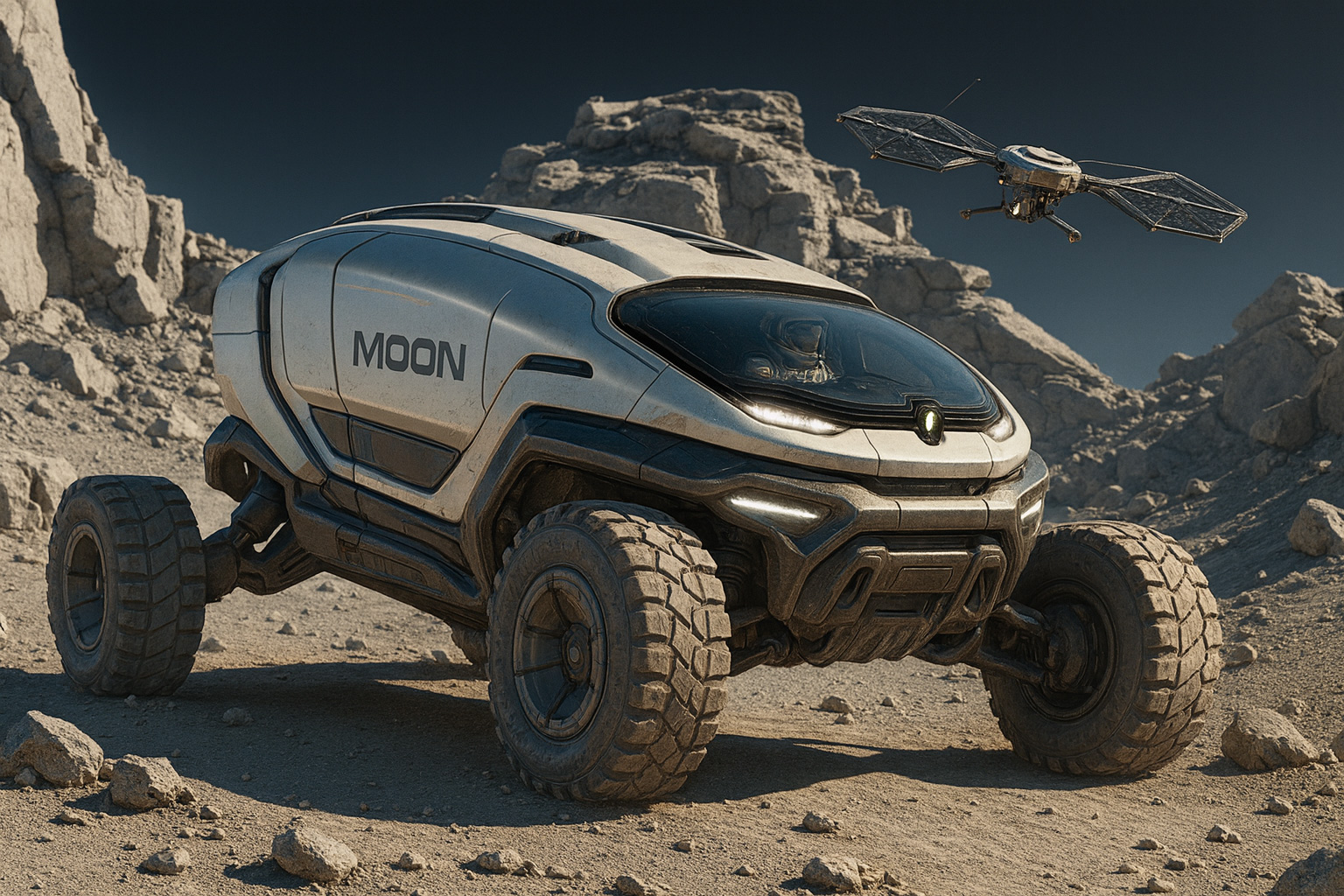
Character: “Exploration pod.” organic capsule with protective lower shell.
Proportion: Tall cabin volume, long wheelbase; 2 seat pressurized rover.
Surfacing: Soft, continuous upper with compressed fillets; lower third is a hard, triangulated bumper ring.
Front DRG: Wide glass visor with a single brow DRL; front bumper forms a recessed intake/step.
Architecture: Monocoque pod visually cradled by an external skid cage; side cutlines hint at clamshell doors.
Suspension/Wheels: High-articulation arms, deep negative space around wheels; chunky block treads for flotation.
Details: Roof rails/ports suggest modular payloads; the companion drone reinforces a scouting/telemetry role.
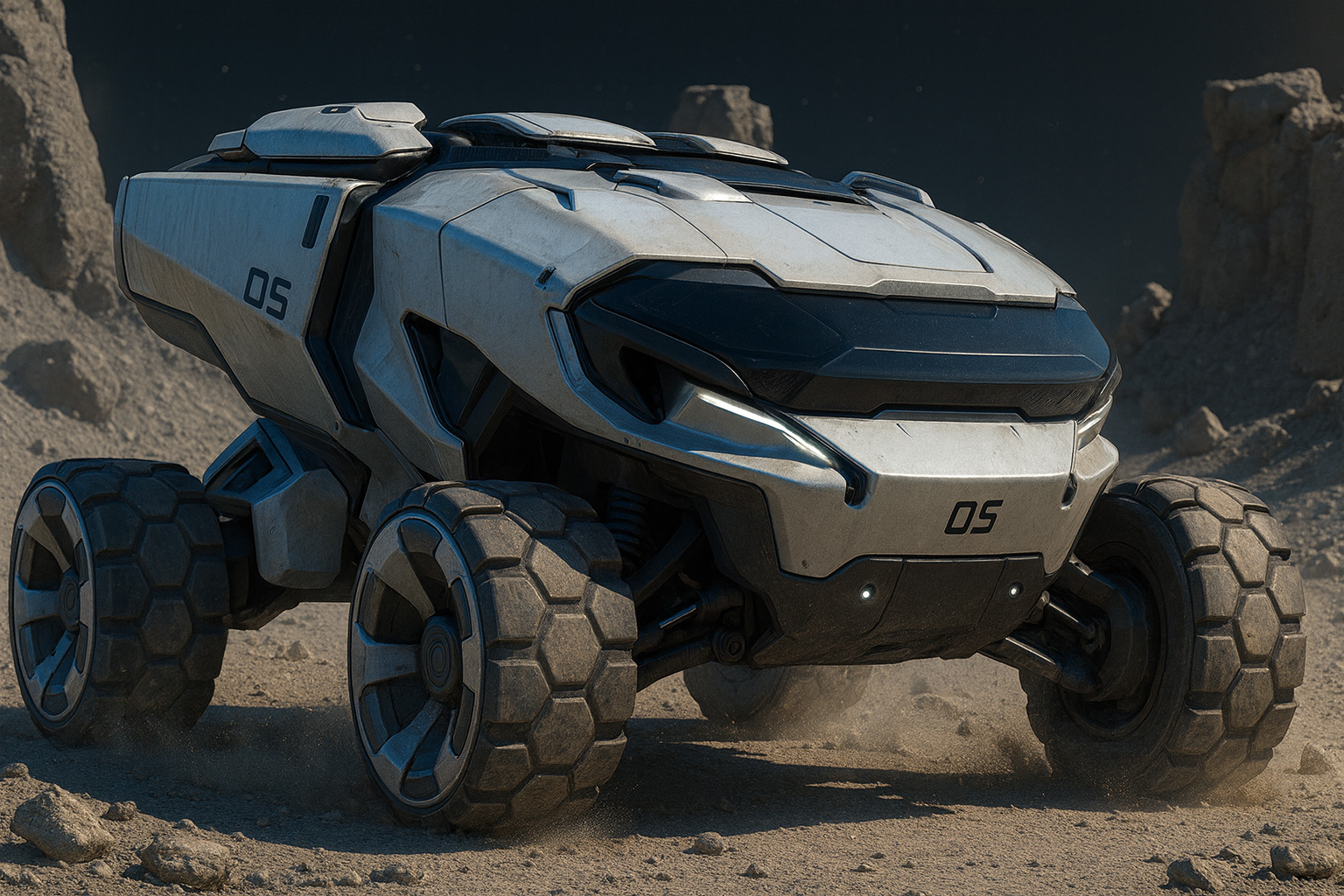
Character: “Sport/UTV” energy—compact, aggressive, performance-biased.
Proportion: Shorter wheelbase, lower H-point relative to wheels; very planted.
Surfacing: Faceted, chamfer-driven language with tight shutlines; strong coke-bottle plan view.
Front DRG: Narrow, hawk-eye apertures with a deep underbite; aero-blade trims double as light guides.
Rolling stock: Hex-cell, non-pneumatic look to the tread/sidewall— modular elastomer segments on aero-biased rims.
Structure: Fenders integrate into the body; underbody shows a flat skid—implies battery/thermal plate below.
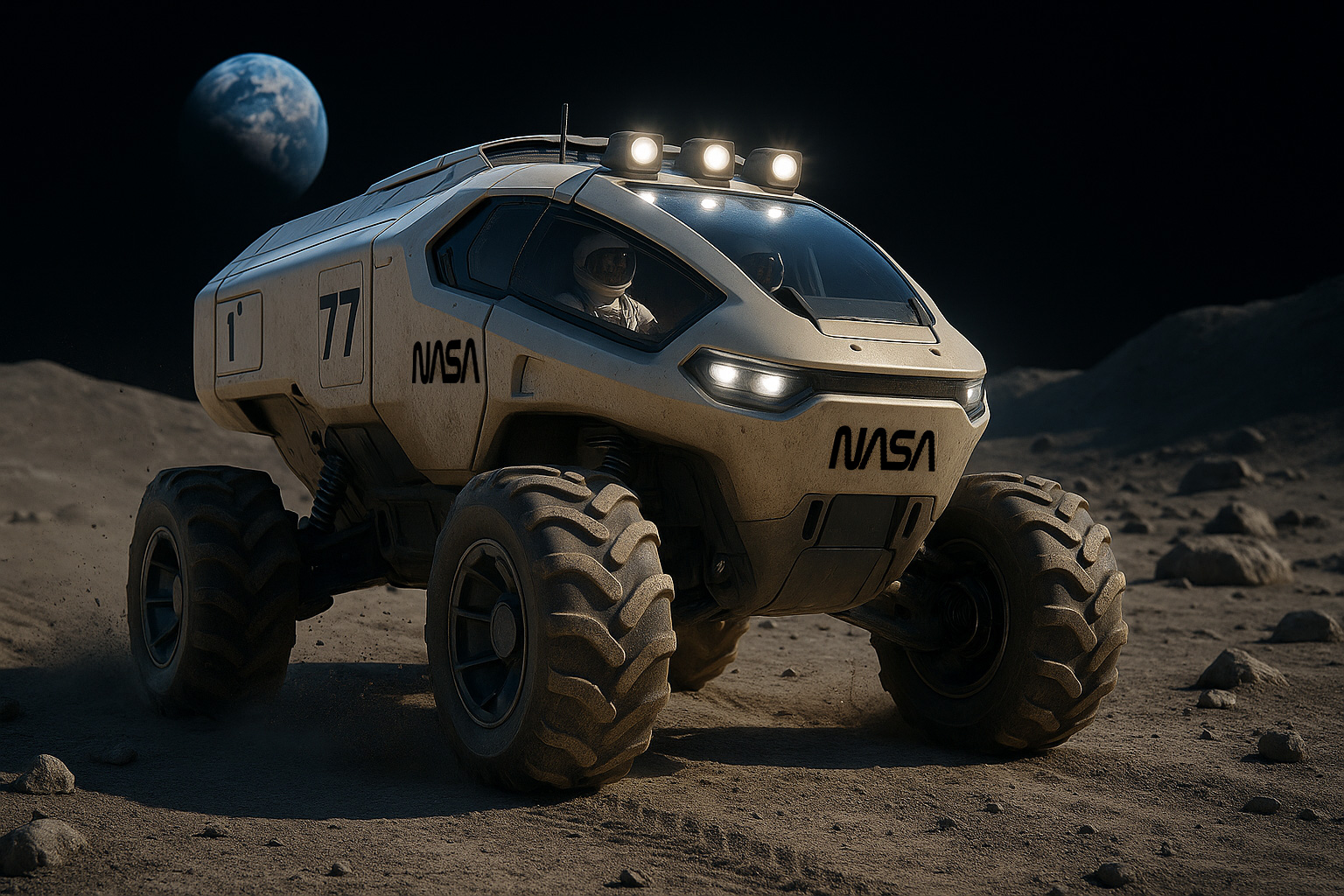
Character: “Pragmatic workhorse.” Utility first, with classic expedition cues.
Proportion: Tall greenhouse with better lateral visibility; longer rear volume for gear.
Surfacing: Simpler planes, larger radii; more mil-spec readability and serviceability.
Lighting/Kit: Roof light bar, straightforward bumper pods; branding used as functional wayfinding.
Wheels/Tires: Agricultural-style lugs—high void ratio for soft soil traction.
Architecture: Looks like a body-on-skid module with robust, easily replaceable corner modules.
Moon Rovers Mini Cargo
- Architecture: Cab-forward capsules on ultra-articulated long-arm suspensions. Wheels pushed far outboard → extreme approach/departure and belly clearance.
- Design language: Hard-edged, faceted armor with chamfer networks; “machine-milled” panel breaks that double as dust sheds.
- Graphic identity: Slim, horizontal DRLs set into triangular cheek volumes; dark underfloor mechanical band as an exo-frame.
- CMF: Off-white ceramic body over graphite/mech black structure; matte, abrasion-tolerant textures; exposed fasteners.
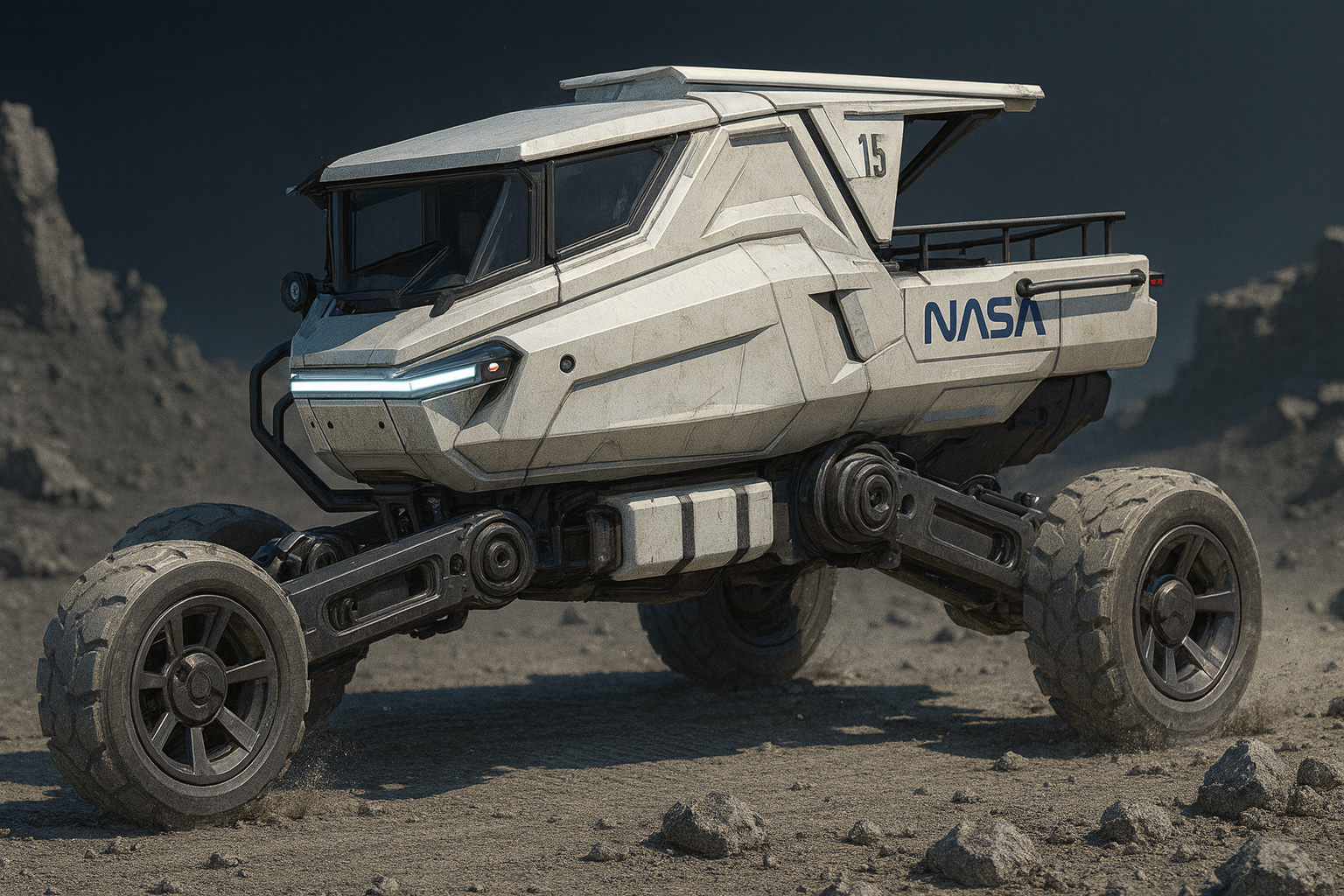
Character: Stalk-legged surveyor. Tall H-point for visibility; pickup-style rear deck for gear.
Proportion: Long cabin cantilever with a thin roof wing; very high roll center visually balanced by thick lower massing.
Surfacing: Angular origami planes with layered chamfers replaceable armor tiles; strong beltline break creating a wedge stance.
Front DRG: Continuous light bar with inset corner eyes → a confident “crossblade” signature.
Structure/Suspension: Massive, single-side swing arms with large spherical joints; mid-ship battery/ballast “bricks” read as modular packs along the spine.
Human factors: Narrow A-pillars and tall daylight opening forward; side ingress likely via aft door—add fold-down step/handholds.
Read of function: Fast reconnaissance / light utility with rooftop sensor mount potential.
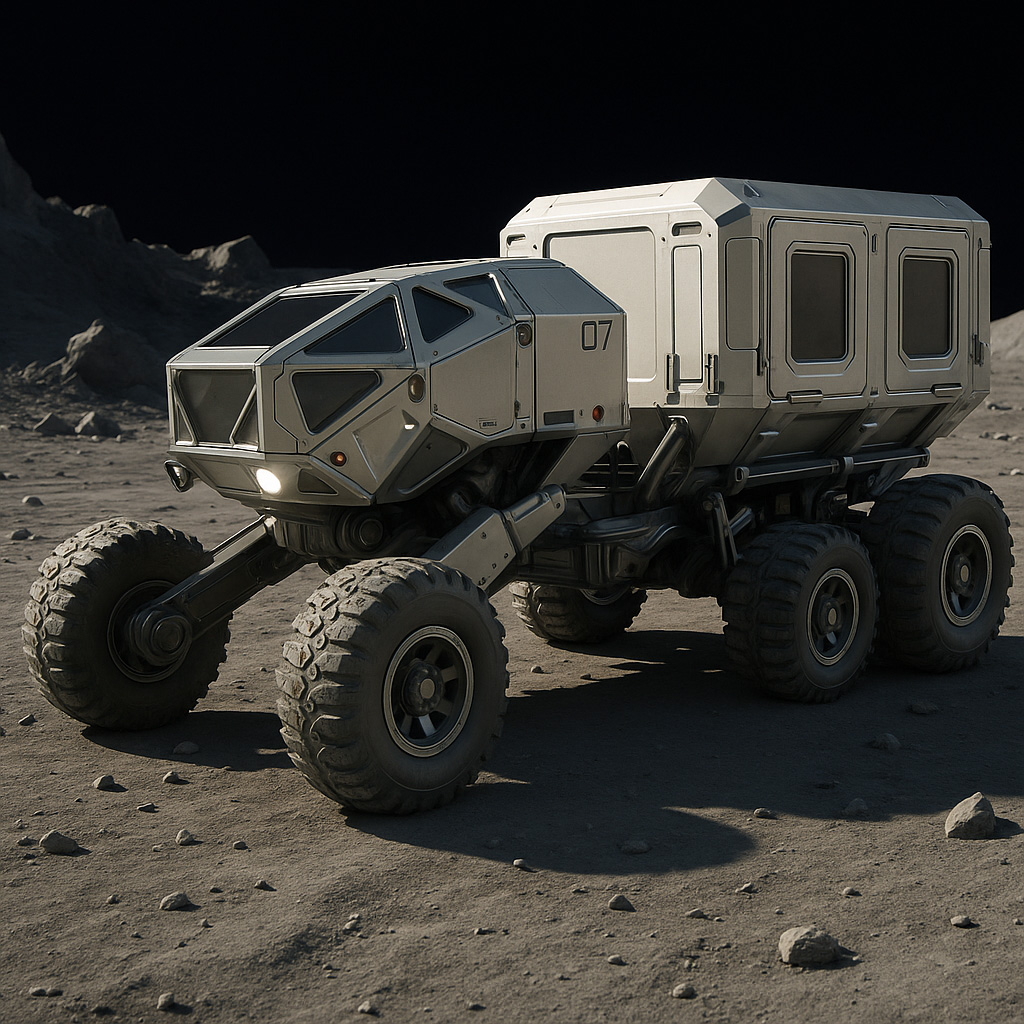
Character: Expedition hauler. Front “pilot pod” plus 6×6 rear habitat → semi-tractor logic for long stays.
Proportion: Low, compact cab nose; long wheelbase with equalized ride height across three axles. Habitat sits as a separate superstructure with isolation mounts.
Surfacing: Cab uses small, triangulated glazing panels—geodesic safety vibe. Habitat uses simple, serviceable panels with corner bumpers and recessed latches.
Running gear: Double wishbone/lever arms front and mid with huge jounce travel; deep-void agricultural treads sized for load rather than speed.
Systems read: Clear separation of dirty/mechanical zone (lower) and clean/pressurized zone (upper); easy to imagine umbilicals between cab and habitat.
Human factors: Side door + low sill on habitat is good; consider a deployable stair cassette and exterior tool lockers accessible in suits.
Moon Survey Utility Rovers
- Architecture: Cab-aft “power spine” with a long forward payload pod riding above an exposed ladder/exo-frame. Wheels pushed wide; big portal-hub vibe.
- Language: Hard-edged, planar armor with chamfer lattices; panelization implies replaceable tiles. Underbody = black mechanical band for services/cooling.
- CMF: Lunar off-white shells over graphite chassis, matte/cerakote textures, proud fasteners, dust-shedding bevels.
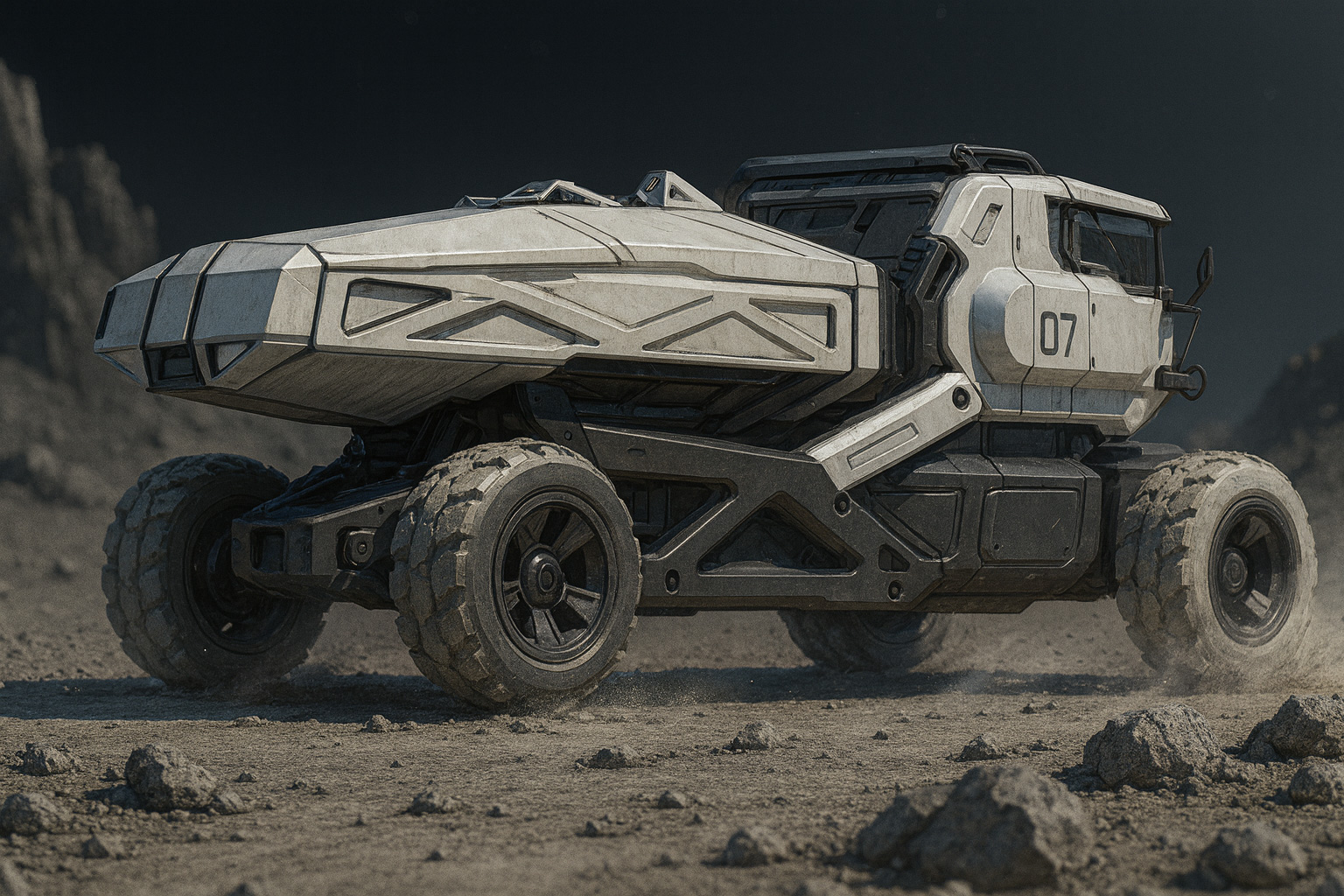
Character: Interceptor hauler. Looks like a rapid-deploy platform carrying a specialized nose module (probe rack, drill, or cargo bay).
Proportion: Extreme cab-rearward layout; long cantilevered pod over a short wheelbase → visual tension and speed.
Surfacing & Graphics: Repeating X-brace embosses on the pod tie into the black exo-truss below; crisp keel running under the nose sells aerodyn/thermal shielding.
Structure: Triangulated side rails with through-bolts → believable torsion path. Bolt-on arm sliders and belly plates advertise field serviceability.
Human Factors: Compact, upright cab with armored side shoulders; roof handholds and rear mirrors read like suit-friendly touchpoints.
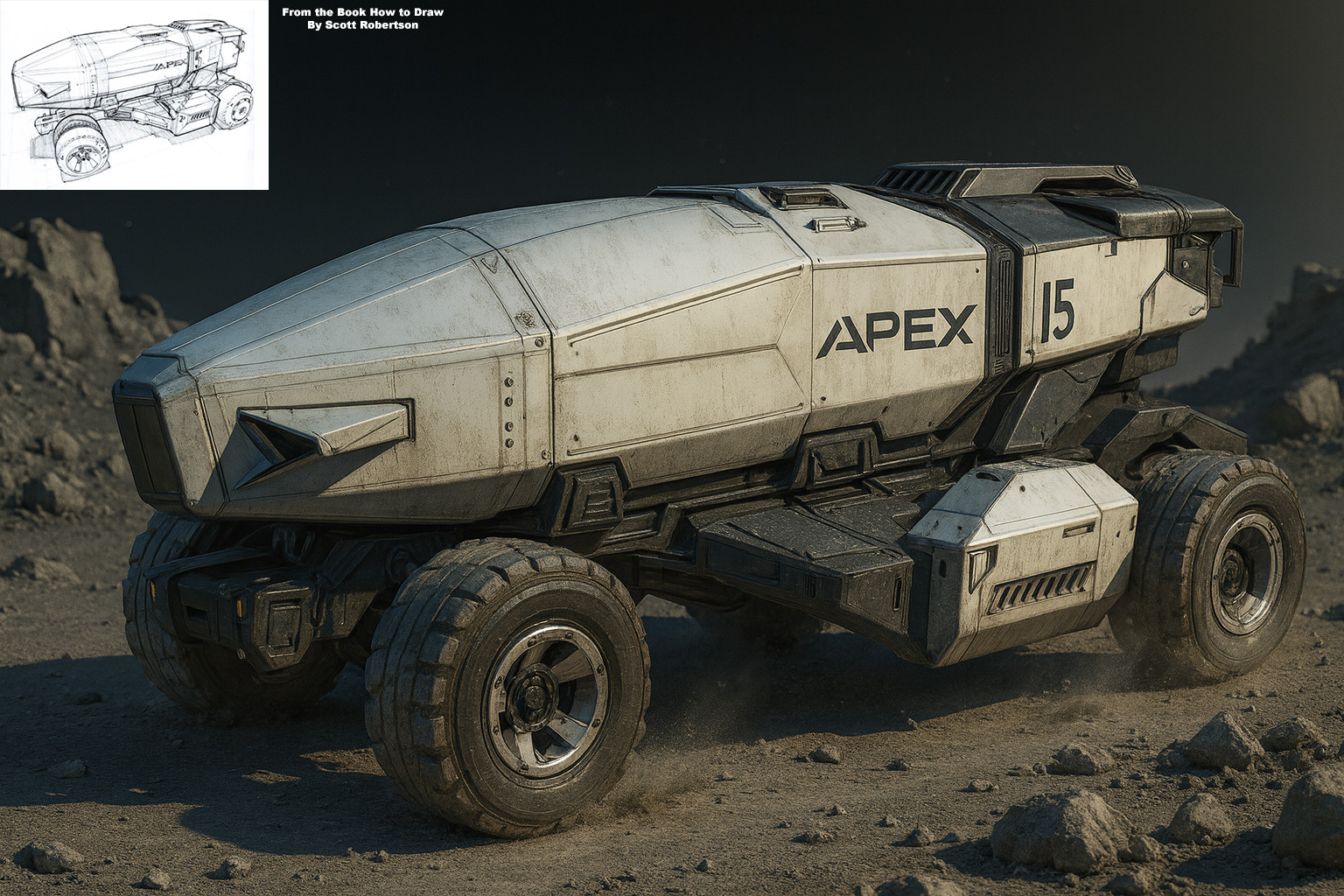
Character: Milspec work truck. Less experimental, more manufacturable; reads like a near-term pre-production unit.
Proportion: Balanced wheelbase with mid-ship mass; pod is shorter, integrating neatly to a central service corridor.
Surfacing: Fewer, larger stampings; softened secondary radii vs F. Triangular cheek “vector” details carry the brand language without over-modeling.
Mechanical: Clear battery/ballast bricks along the sill; modular bumper corners and portal boxes suggest standardized spares.
Details: Service steps integrated into the black sill, recessed marker lights, accessible fastener grid—great for EVA maintainers.