Motorcycle Concepts
Hyper Sportbike Concepts
Conceptual Project
Overall Layout:
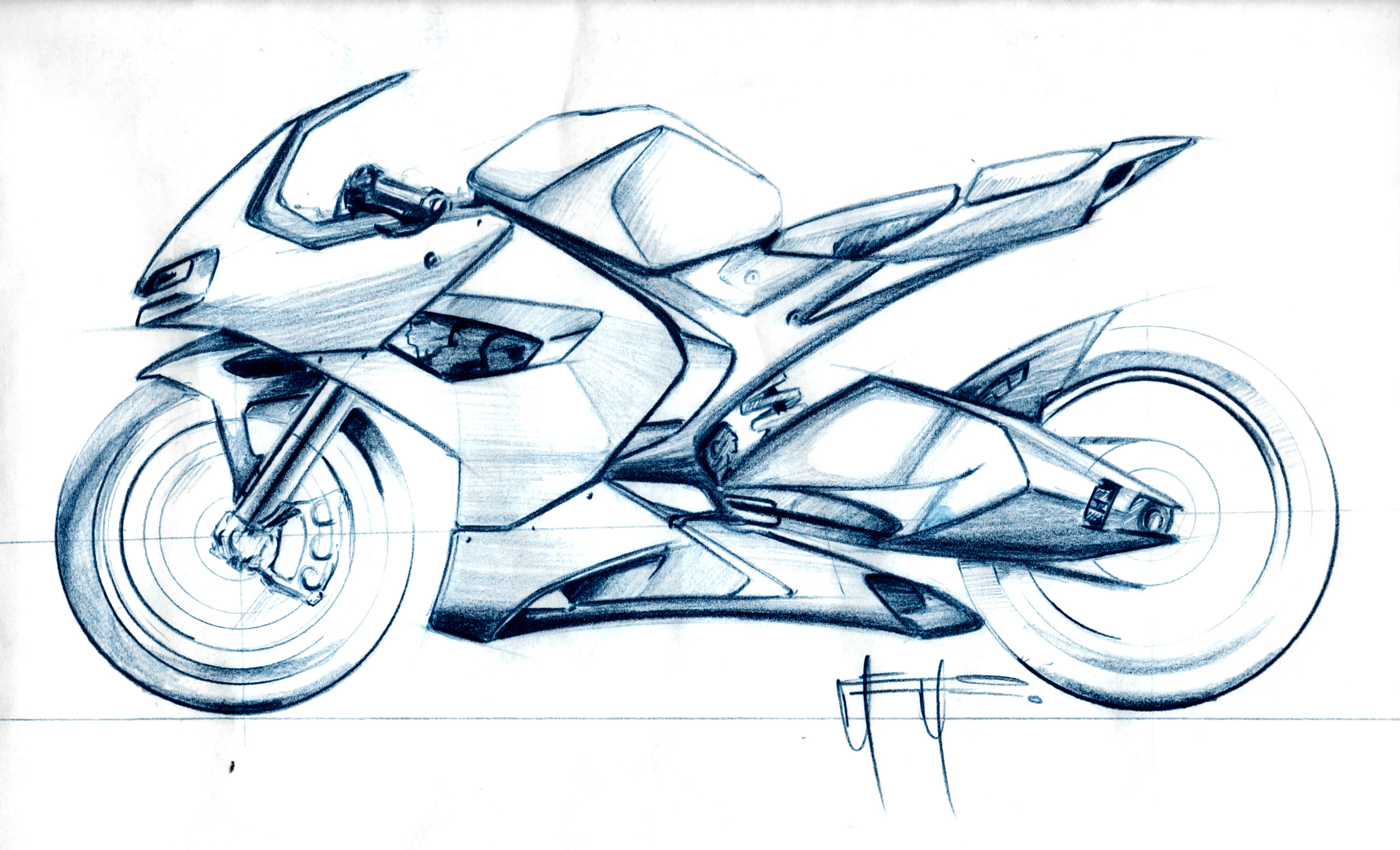
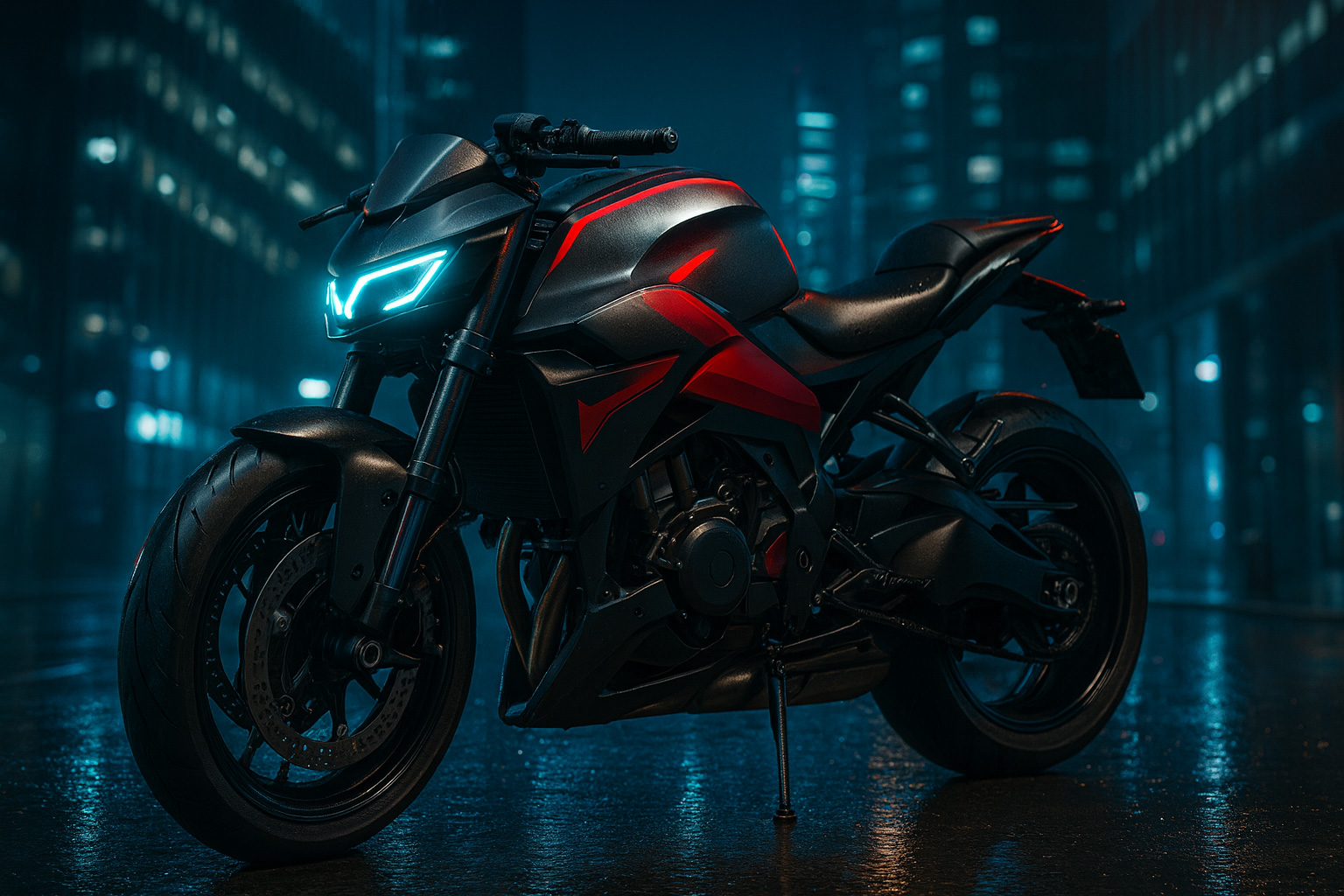
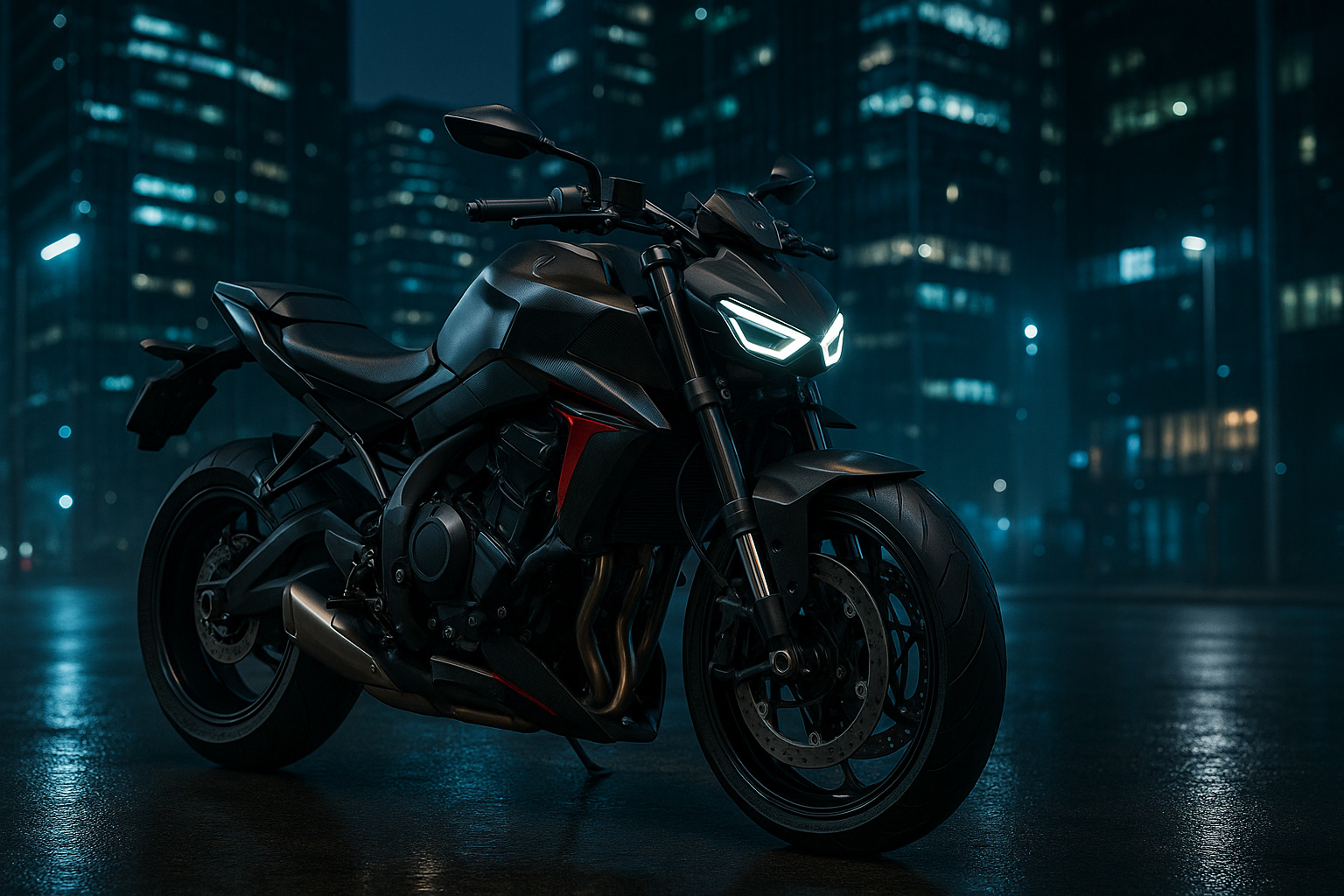
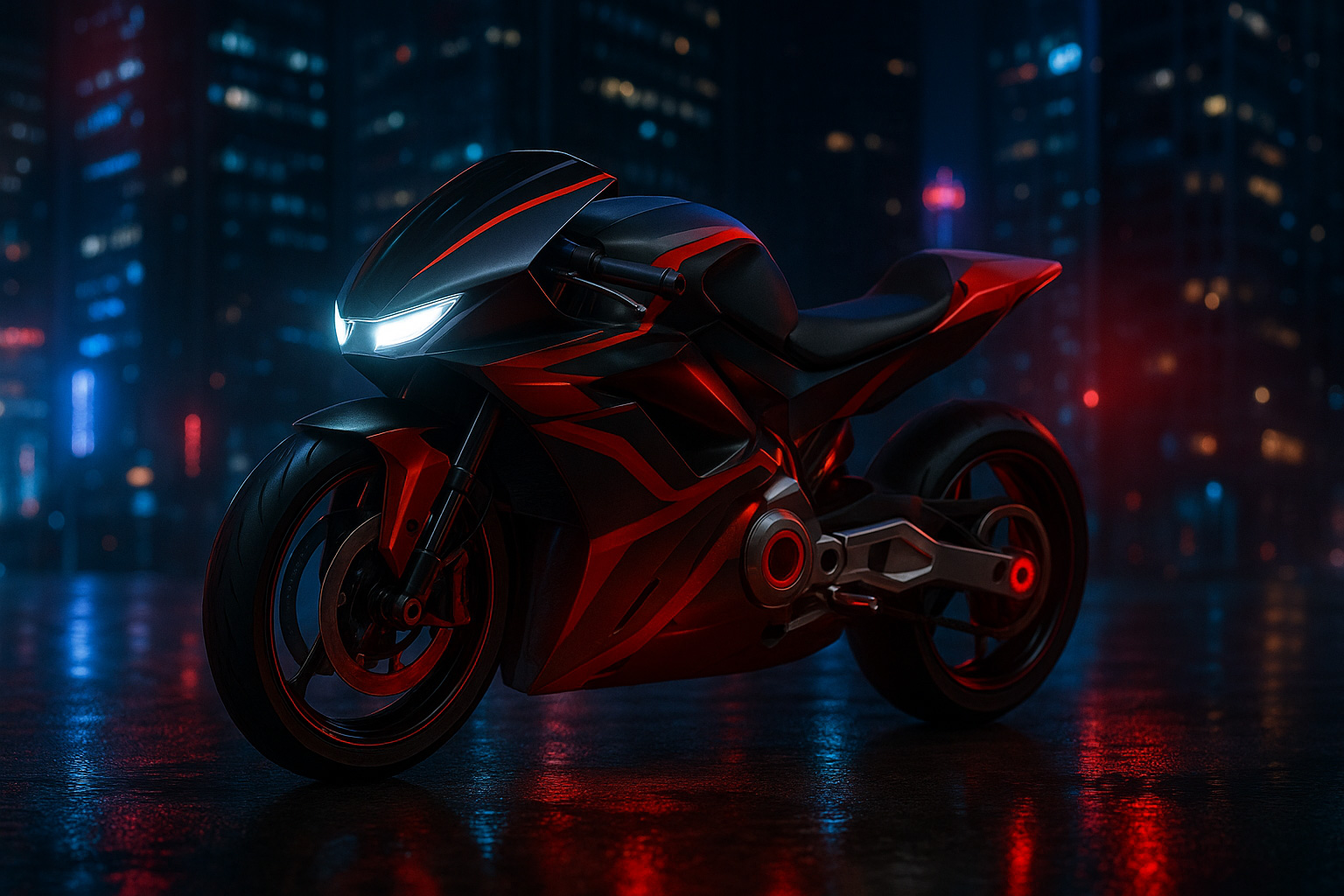
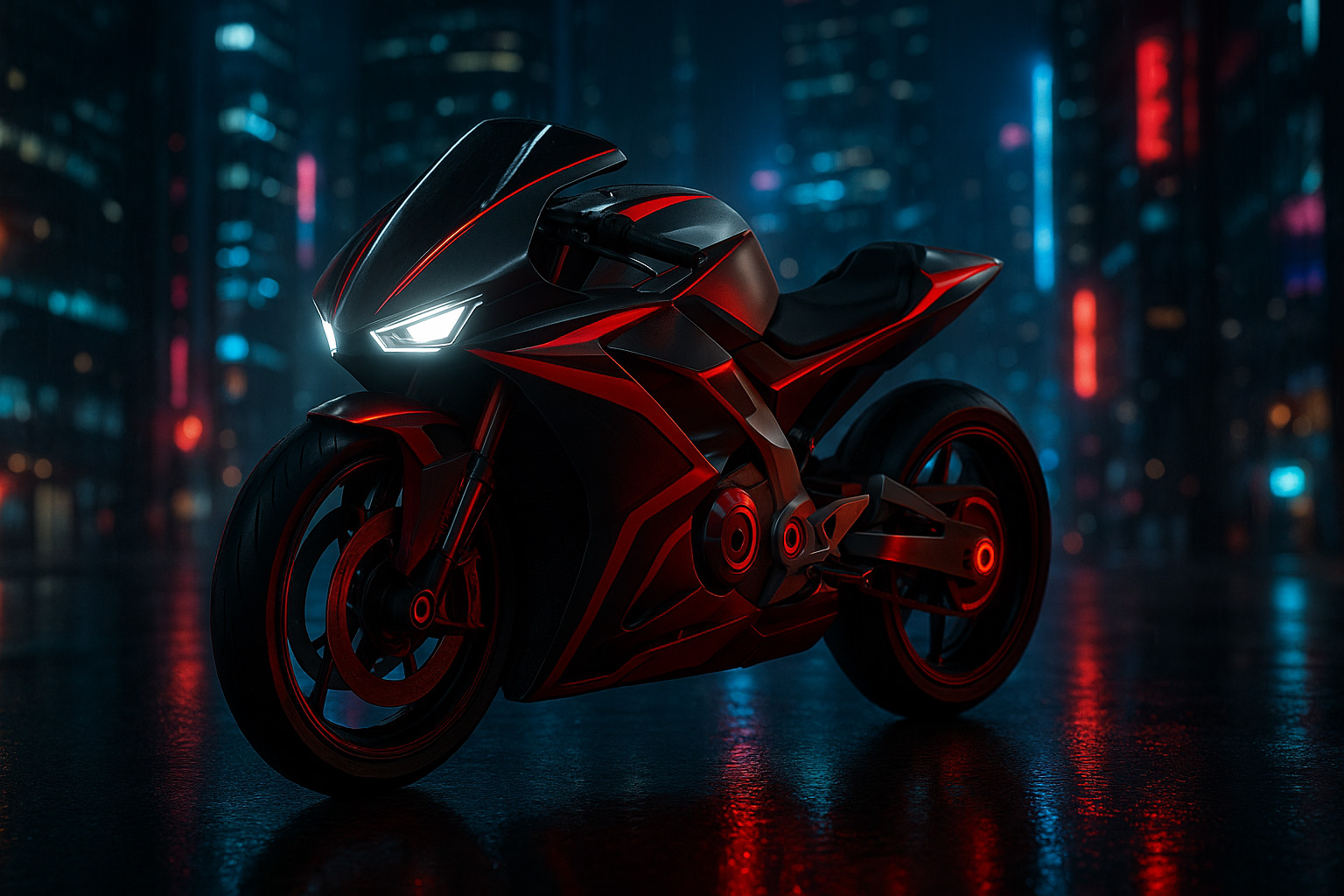
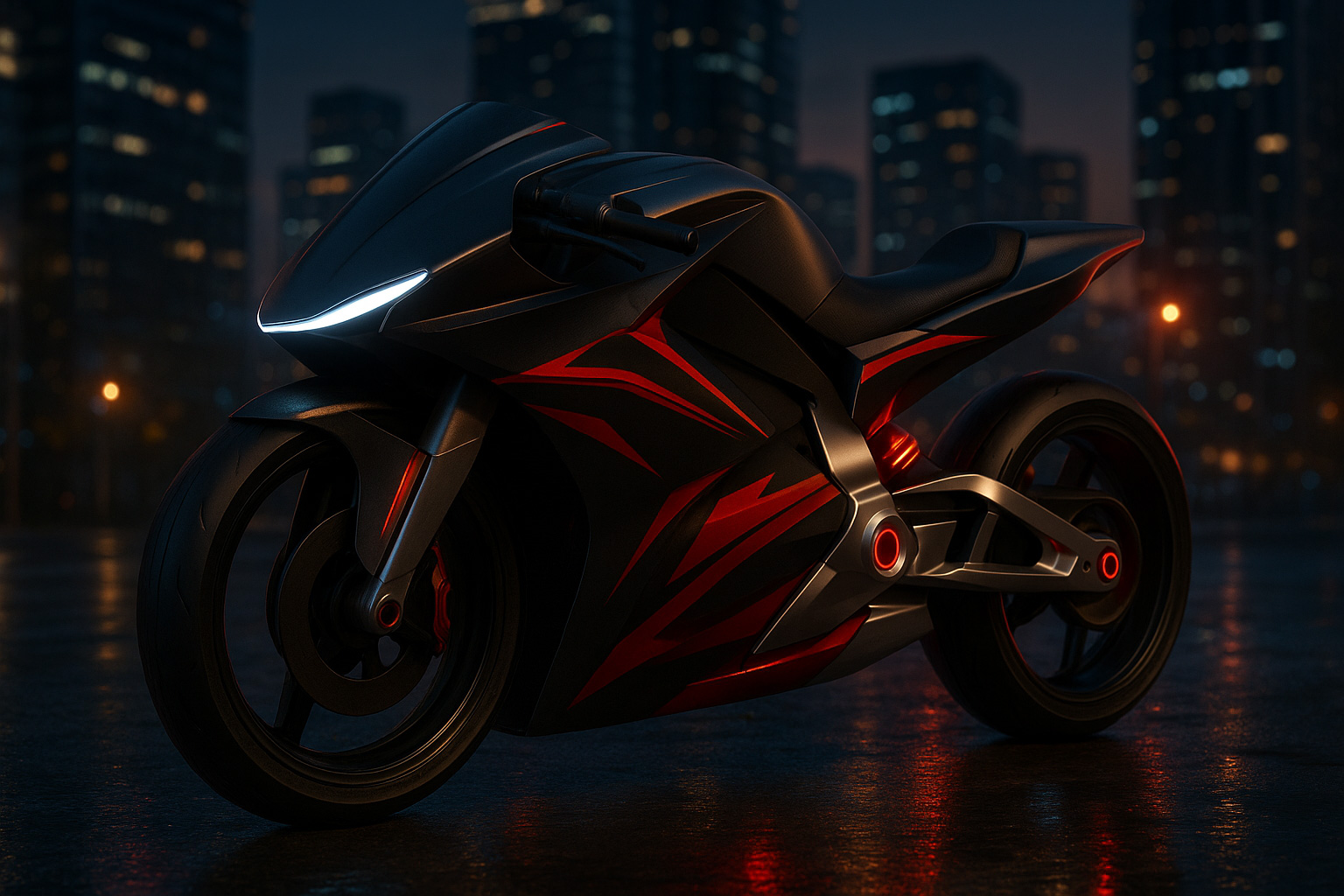
The Specter is built around a compact central-mass proportion, typical of hyper-performance motorcycles where visual weight and balance pivot around the tank and rider triangle.
- Front-heavy bias gives it a predatory, attacking posture.
- The short tail and long front overhang visually stretch the silhouette forward, reinforcing motion and acceleration.
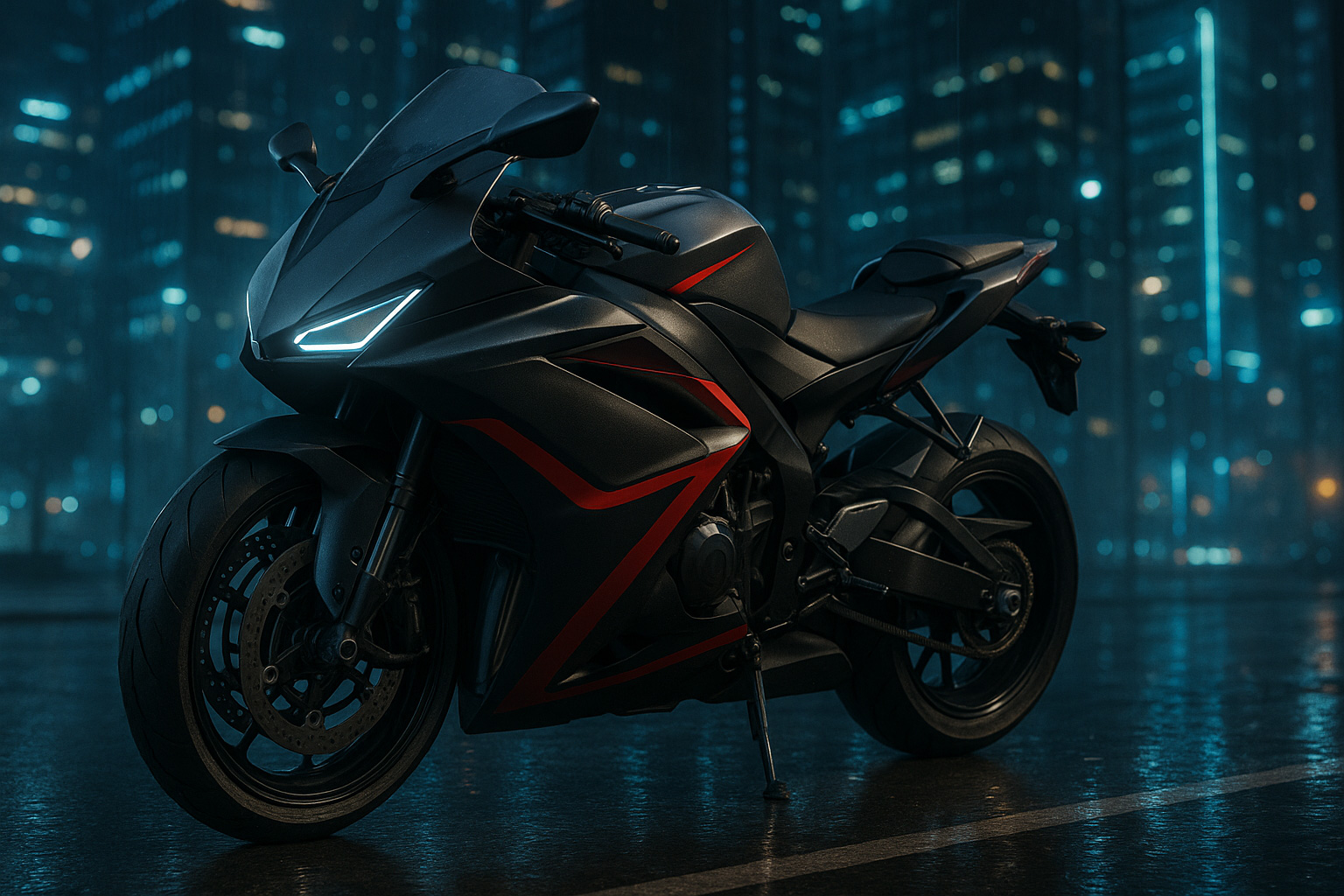
- The low windscreen line and aggressive rake angle establish aerodynamic intent — visually aligning the machine along a diagonal of speed.
Architectural Logic:
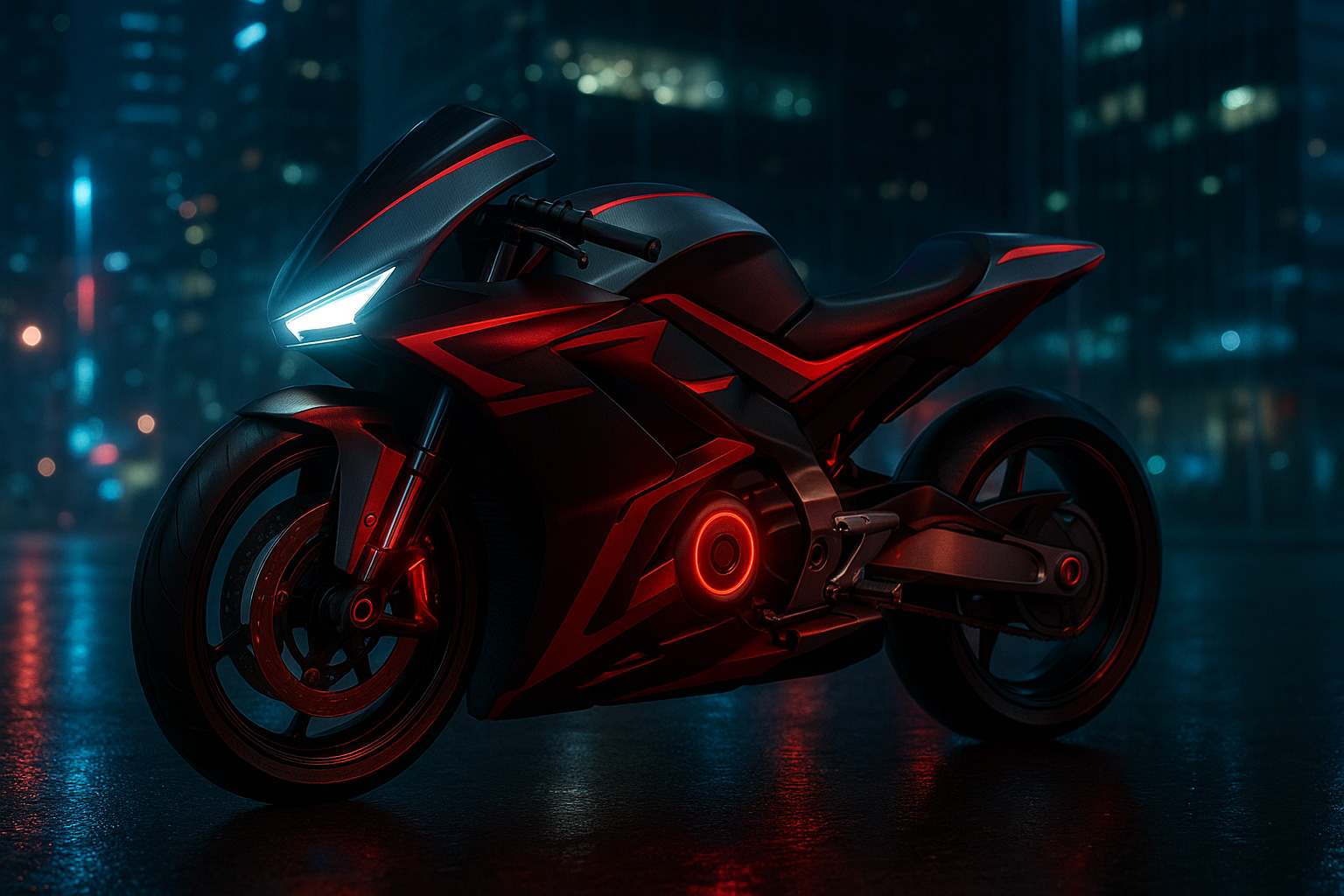
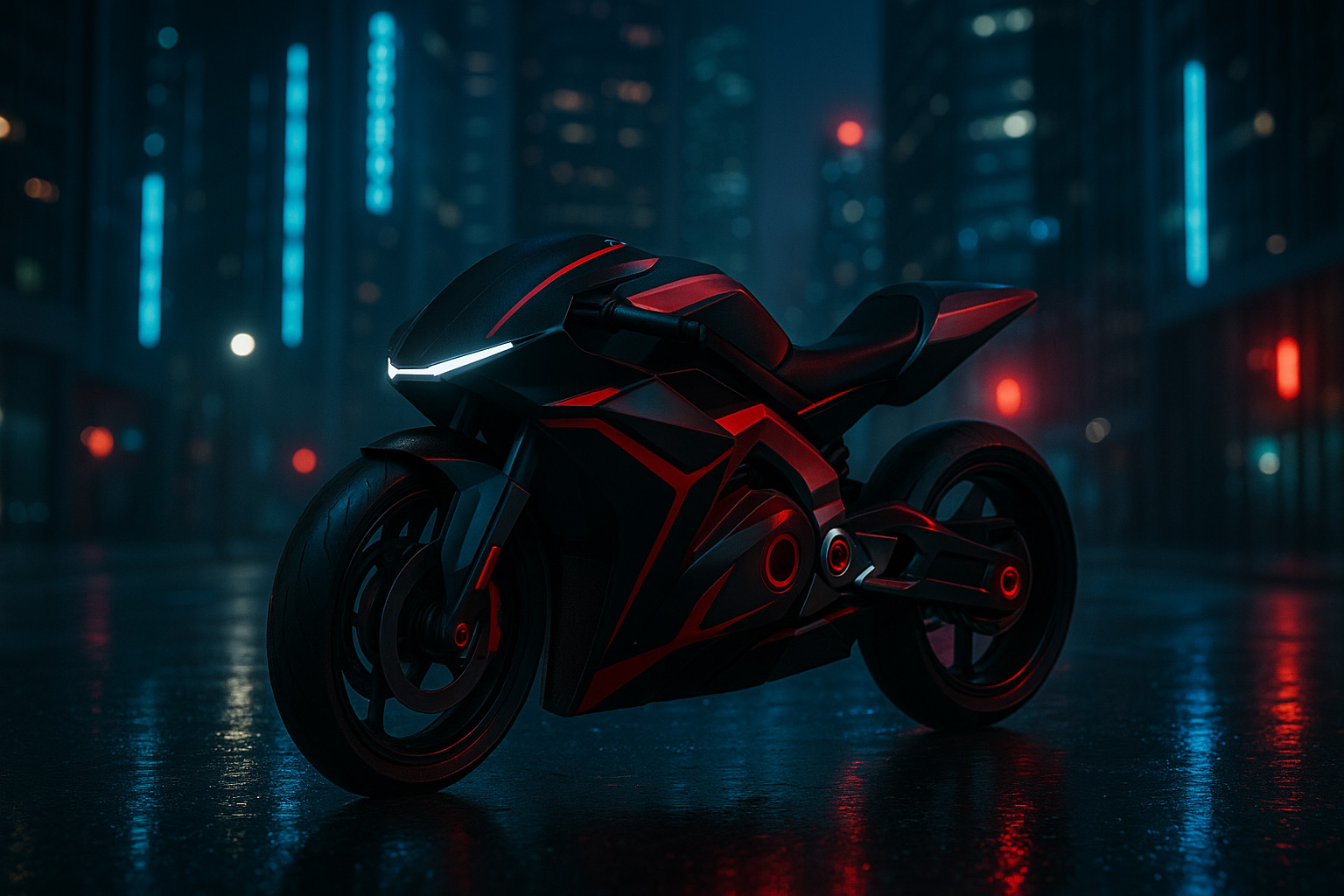
The volumes are structured to appear dense in the core and evaporating toward the extremities — the fairing converges at the front while the tail vanishes into a blade-like form.
This creates a compression-release effect, giving the bike latent energy even when static.
Its architecture conveys thrust, agility, and mechanical precision in equal measure.
Design Philosophy:
The Specter employs a "parametric tension" language — surfaces read as precision-machined and aerodynamic, not sculpted by hand but engineered by airflow and purpose.
Surface Behavior:
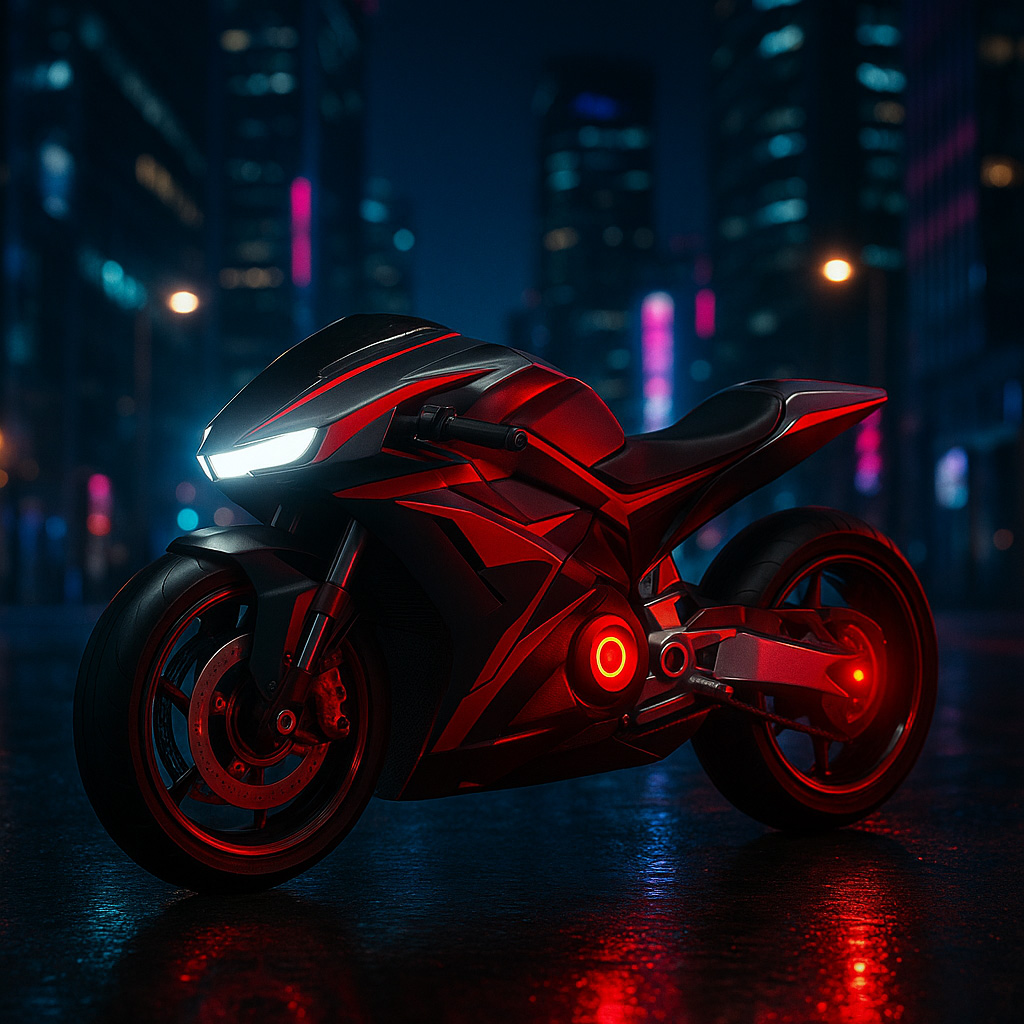
- Primary volumes (tank, front fairing, and seat cowl) are taut, planar, and highly directional — surfaces are pulled tight over structure, like tensile fabric over carbon bones.
- Secondary surfaces create venting, channeling, and diffuser-like recesses — establishing functional depth and airflow layers.
- Light reflections are crisp and contained, highlighting surface precision rather than curvature softness.
Material Read:
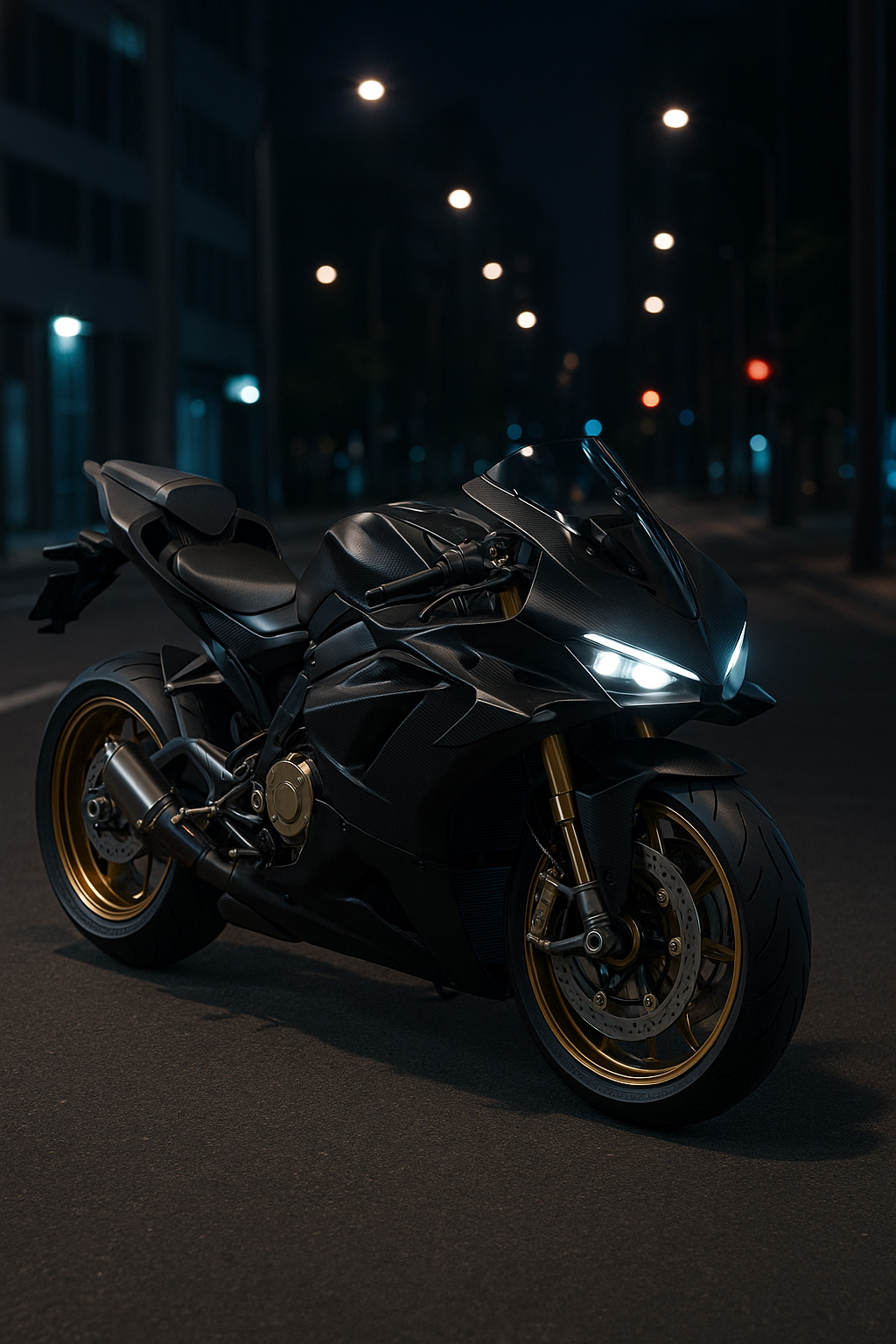
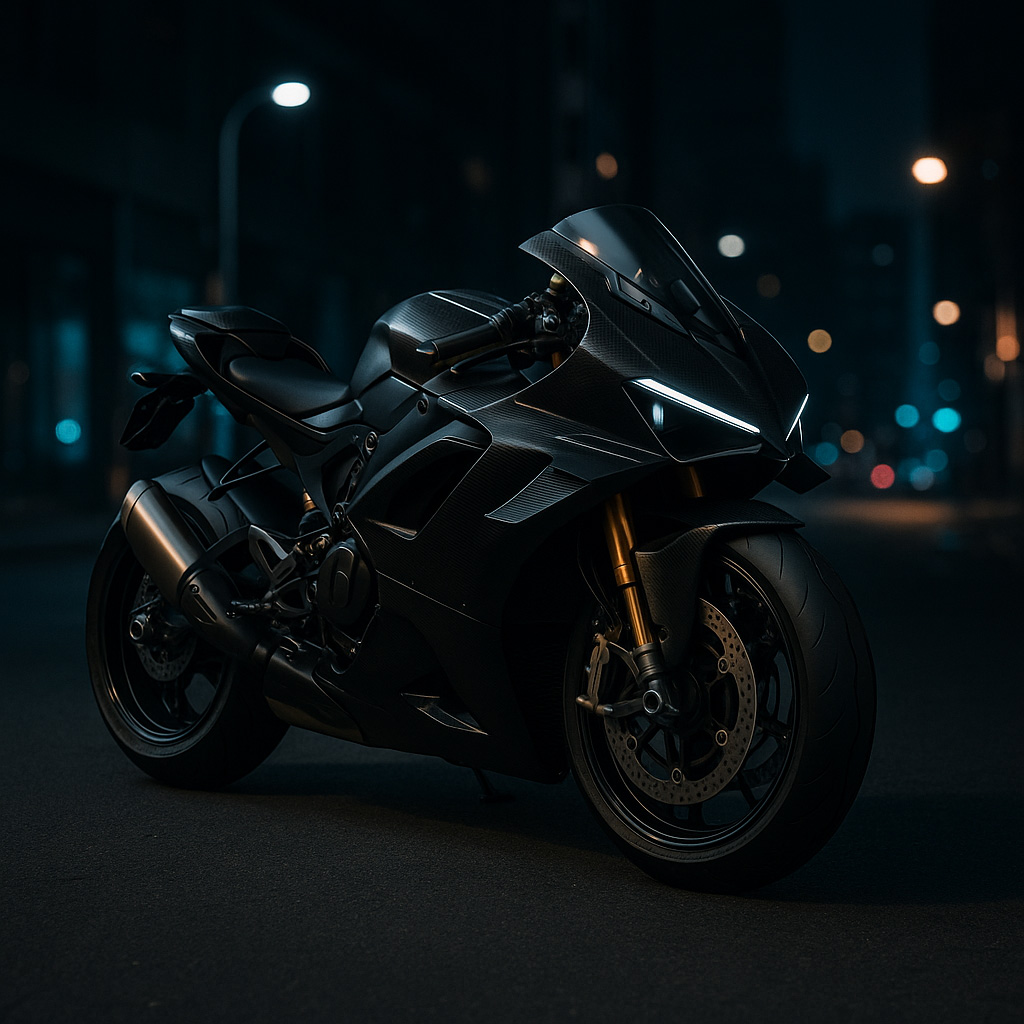
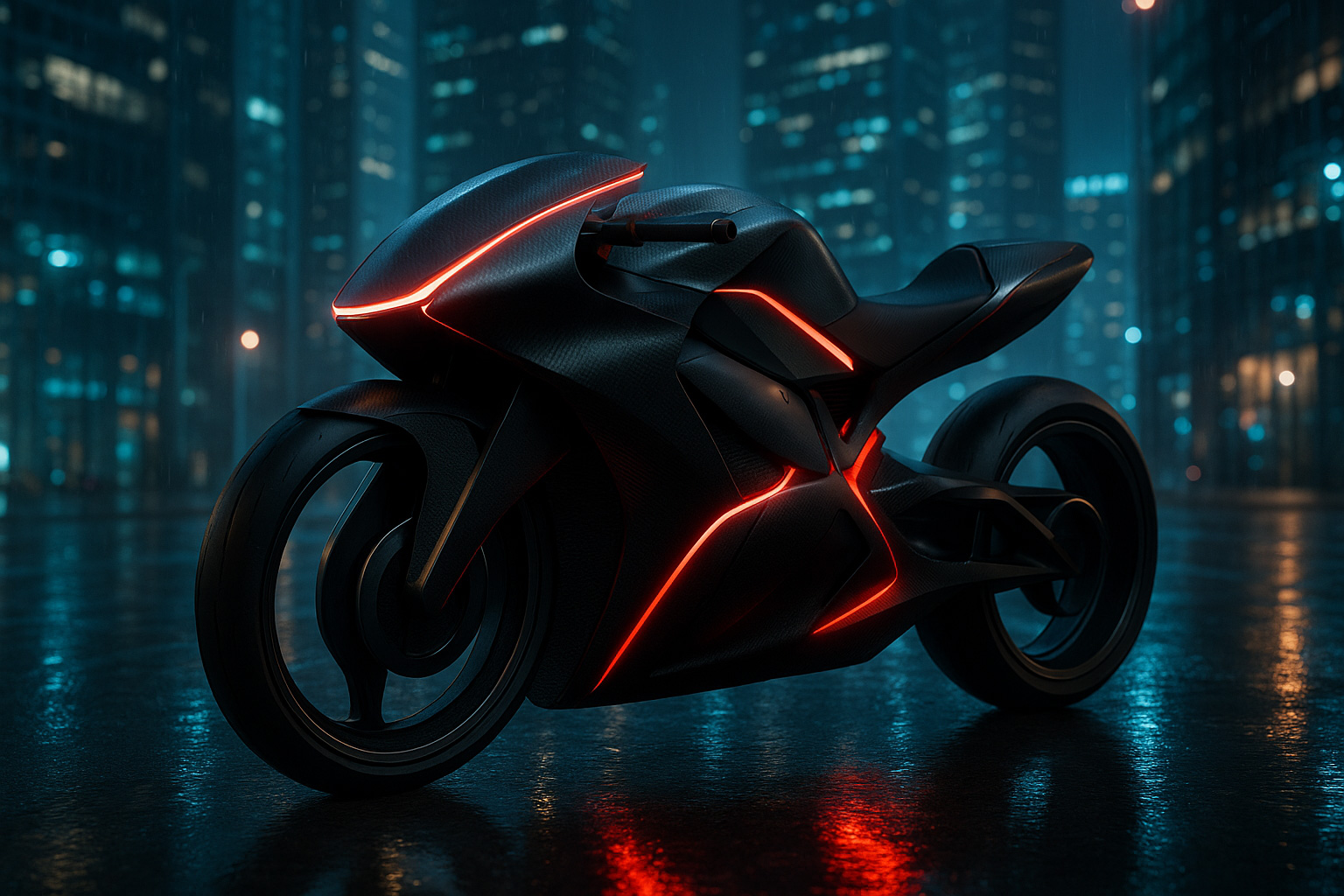
- Matte carbon or graphite composite finish enhances the technical form — design communicated through shadow, not ornament.
- Surface junctions are precise, showing no visual looseness — each intersection feels engineered.
Form equals function here — every plane, recess, and breakline exists for performance integrity.
Primary Lines:
- Shoulder Line (Tank Flow): A single continuous arc runs from the steering head to the seat hump — the backbone of the visual identity. It dictates posture and proportion.
- Fairing Creases: Sharp diagonal cuts near the headlamps direct airflow and create forward thrust in visual rhythm.
- Lower Body Line: Parallel to the ground, stabilizing the aggressive upper geometry — grounding the form like an aerodynamic keel.
Graphic Hierarchy:
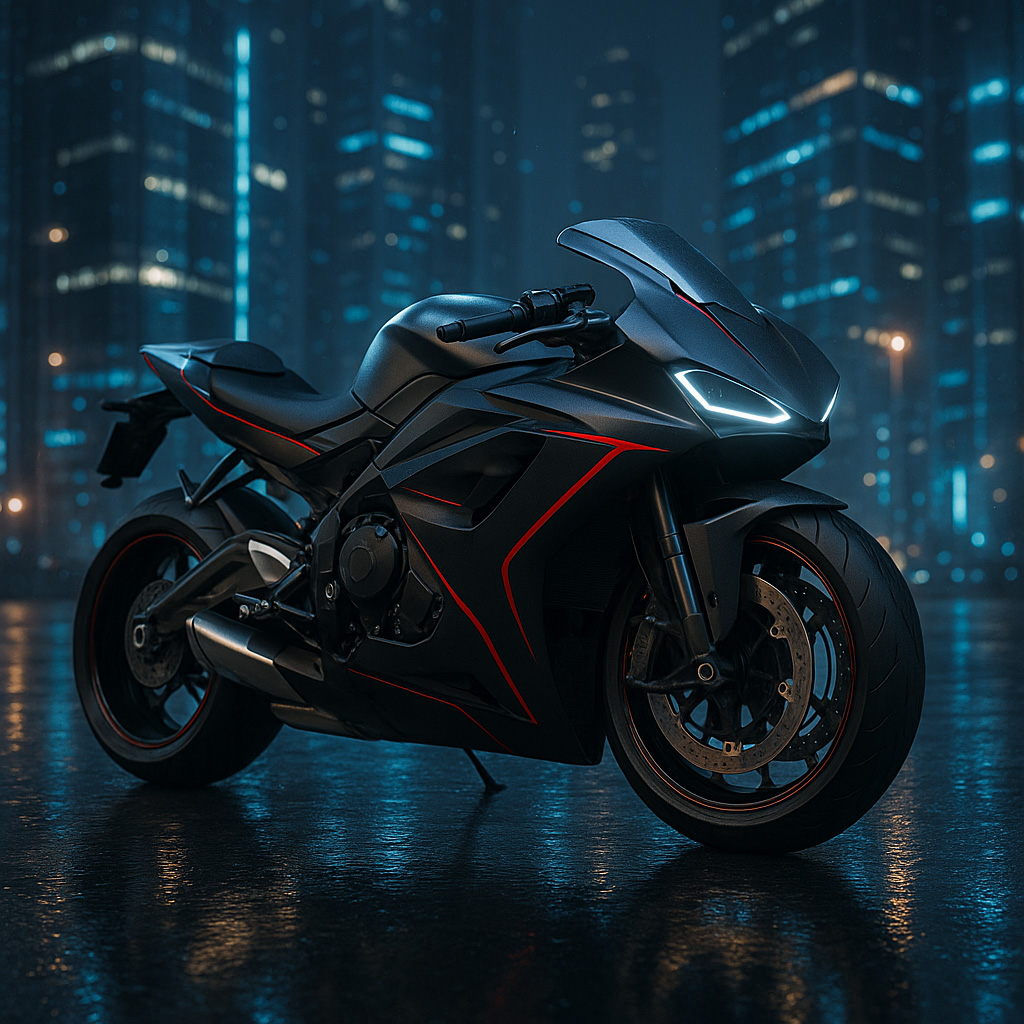
- The lighting signature is razor-thin and V-shaped — expressing intent and speed.
- Air intakes and exits are seamlessly integrated into the form language — negative space used as design structure.
- The side fairing geometry generates tension between solid and void — emphasizing airflow intelligence.
Lines serve both aerodynamic logic and emotional clarity — every edge implies motion.
Static-Dynamic Relationship:The Specter has a forward-weighted, crouched stance, evoking a sprinter in the starting blocks.
- Low front, high tail creates a diagonal vector — the visual equivalent of a compressed spring.
- Wheel alignment and body taper suggest agility and mechanical control — there’s no visual excess, only tension and purpose.
Ground Connection:
- Large tire section and exposed suspension architecture add mechanical gravity.
- The low ride height and wide front profile amplify grip and road dominance.
The stance tells a story of controlled violence — motion restrained by engineering discipline.
Design Character:The Specter’s identity is stealth-performance minimalism — technical aggression refined through design discipline.
- It communicates precision, authority, and futuristic restraint — the kind of confidence that doesn’t need to shout.
- The absence of ornamentation reinforces its “engineered by necessity” ethos — design serving performance, not fashion.
Emotional Tone:
“Cold, composed, and lethal — a machine bred for speed, not spectacle.”
Keywords:
🜂 Tensioned | Engineered | Stealth | Aerodynamic | Intelligent Power
Sketch Gallery